
Fractional COO for Beauty Brands: When Operations Become the Constraint
By Sébastien, COO at We-Curate. Operations, systems and process across the UK, US and EMEA.
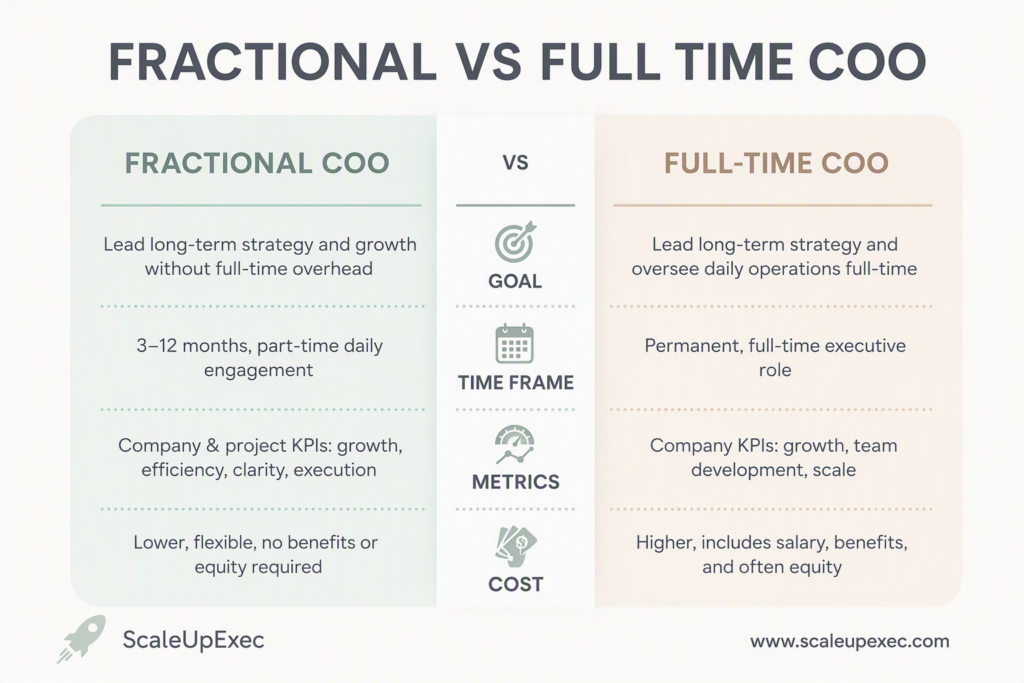
A fractional COO is a senior operations executive who runs your operational function part-time — typically one to three days a week on a monthly retainer — with real ownership of supply chain, compliance, systems and process.
Marketing failures are visible. A campaign underperforms, everyone sees it, and someone is held responsible. Operational failures are quiet. A brand runs out of its hero SKU three weeks into a Sephora launch. A shipment sits at customs because a commodity code was wrong. Margin disappears into retailer chargebacks nobody is reconciling.
None of that shows up in a board deck as a failure. It shows up as disappointing growth.
Having spent my career on the operations and systems side, I will say plainly what I believe the industry under-states: more beauty brands are killed by operational weakness than by weak marketing. The marketing was usually fine. The business could not deliver on it.
Why beauty operations are unusual
Inventory is where your cash goes
This is the defining feature of the category and it is what makes beauty operations different from software, services, or most of what generic fractional COO content is written about.
You pay for components, filling and finished goods months before you sell anything. Minimum order quantities are set by your manufacturer, not by your demand. Lead times run to months. Beauty products have shelf lives and period-after-opening constraints, so old stock is not just tied-up cash — it eventually becomes a write-off.
Forecast too low and you stock out during your biggest visibility window, which in retail is close to unrecoverable. Forecast too high and you have converted your runway into boxes in a warehouse.
Inventory planning is not a back-office task in beauty. It is the primary financial decision the business makes each quarter.
Regulation is an operational function, not a legal one
MoCRA registration and product listing in the US. A UK Responsible Person and SCPN notification for Great Britain. CPNP for the EU and Northern Ireland. A Product Information File that has to exist, be current, and be accessible at a specific address.
Each of these has a process owner, a renewal cycle and a failure mode. Treated as a legal box to tick before launch, they become the thing that delays your launch. Treated as an operational function with a calendar, they are entirely manageable.
Retail compliance quietly removes margin
Prestige and mass retailers both operate vendor compliance regimes: labelling and barcode standards, packing and palletisation rules, delivery windows, EDI requirements, service-level expectations. Miss them and you are charged.
Individually these charges are small enough to be ignored. Cumulatively, across a year, they are a margin line — and most emerging brands are not reconciling them at all. If nobody in your business can tell you what you paid in chargebacks last quarter, that is the answer.
What a fractional COO owns in a beauty brand
- Supply chain and manufacturing. Contract manufacturer and component supplier relationships, MOQ negotiation, lead time management, quality and second-source planning.
- Demand and inventory planning. Forecasting by SKU and channel, safety stock, allocation across DTC and retail, phasing production against cash.
- Regulatory operations. Owning the compliance calendar across markets so that regulatory work runs ahead of commercial commitments rather than behind them.
- Logistics and 3PL. Warehouse selection and performance, customs and duty, international shipping, returns.
- Retail operations. EDI onboarding, vendor compliance, chargeback reconciliation, forecast collaboration with retail partners.
- Systems and process. The ERP, inventory and reporting stack, and the documented processes that let the business run without the founder in every decision.
What they do not do: pick up a warehouse shift. A fractional COO builds the structure and holds people to it. If the gap is capacity rather than leadership, you need a hire, not an executive.
What it costs
Fractional COO retainers generally run between $5,000 and $18,000 per month, with most ongoing engagements landing between $8,000 and $15,000 for one to two days a week. Day rates and project-based scopes — an ERP implementation, a 3PL migration — are also common.
A full-time COO in the US carries a base salary of roughly $215,000, with true employer cost between $280,000 and $305,000 once benefits, payroll taxes and recruiting fees are included. Fractional engagements typically sit 40 to 65 percent below that.
But for a beauty brand, cost is the wrong frame. The relevant comparison is not the retainer against a salary. It is the retainer against a single quarter of overstocked inventory, or one missed retail launch window.
Fractional COO or fractional CMO first?
Founders ask this constantly, and there is a straightforward test.
If you cannot reliably deliver what you already sell, hire the COO first. More demand against a broken operation produces stockouts, chargebacks, unhappy buyers and cash strain. You will have paid to make the problem larger.
If your operation is sound and nobody is generating demand, hire the CMO first. A well-run business with no customers is a marketing problem.
The diagnostic questions are unglamorous. Do you know your true landed cost per unit by market? Can you produce a twelve-month inventory forecast you believe? Do you know what you paid in retailer chargebacks last quarter? Could you supply a national listing tomorrow?
If those answers are uncertain, the constraint is operational, whatever the growth plan says.
When a fractional COO is the right call
- You are moving from DTC into retail, and retail operations are a discipline you have never run
- You are entering a new market and the regulatory and logistics layer is unfamiliar
- The founder is the operations function, and it has become the ceiling on growth
- Margin is worse than your model says and nobody can explain the gap
- You are preparing for investment or exit and operational maturity is part of what is being assessed
- You are between operations leaders and cannot afford drift
When it is not
- You need hands, not leadership. If the work is executing a defined process, hire an operations manager. A fractional COO designing a process nobody has time to run is wasted spend.
- Your operation is genuinely simple. A single-SKU DTC brand with one 3PL and one market does not need a COO. It needs good habits.
- You want someone to own daily firefighting. Two days a week does not cover that, and scoping it that way guarantees frustration on both sides.
- The organisation will not change. Operational improvement requires people to work differently. If leadership is not committed to that, the engagement will produce documents nobody uses.
What to look for in a beauty fractional COO
- Category experience, specifically. Cosmetics manufacturing, shelf life, component sourcing and beauty regulation do not transfer from general consumer goods as cleanly as people assume.
- Market experience where you are going. US and UK operations differ substantially — customs, compliance regimes, retailer requirements and 3PL landscapes are all different.
- Retail operations, not just DTC. Many operators are strong on e-commerce and have never onboarded to a major retailer. Ask which ones, and when.
- Systems literacy. The ability to choose, implement and get adoption on the operational stack. Poor systems decisions are expensive for years.
- Willingness to say no. A good COO will tell you a launch date is not achievable. That is the job.
Frequently Asked Questions
What is a fractional COO?
A fractional COO is an experienced chief operating officer who leads a company’s operations part-time, typically one to three days a week on a monthly retainer, with ownership of supply chain, process, systems and operational performance.
How much does a fractional COO cost?
Fractional COO retainers typically range from $5,000 to $18,000 per month, with most ongoing engagements between $8,000 and $15,000. This is generally 40 to 65 percent below the total cost of a full-time COO, whose loaded employer cost in the US runs $280,000 to $305,000 or more annually.
What does a COO do in a beauty brand?
In beauty, a COO owns supply chain and manufacturing relationships, demand and inventory planning, regulatory operations across markets, logistics and 3PL performance, retail vendor compliance, and the systems and processes the business runs on.
Should a beauty brand hire a fractional COO or a fractional CMO first?
Hire the COO first if the business cannot reliably deliver what it already sells. Generating more demand against a constrained operation creates stockouts, chargebacks and cash pressure. Hire the CMO first if operations are sound and the constraint is demand.
When is a beauty brand too small for a fractional COO?
A single-market, single-channel brand with a simple product range and one logistics partner generally does not need one. The model becomes valuable when complexity arrives: multiple markets, retail alongside DTC, several manufacturers, or regulatory obligations in more than one jurisdiction.
Can a fractional COO help with retail onboarding?
Yes, and it is one of the most common reasons brands engage one. Retail onboarding involves EDI setup, vendor compliance standards, forecast collaboration, packing and delivery requirements and chargeback management — a discipline most DTC-native brands have never run.
Fractional Operations Leadership at We-Curate
We-Curate provides fractional COO and operational leadership to beauty and lifestyle brands across the UK, US and EMEA. That means owning the unglamorous layer — inventory, compliance, retail operations, systems — so that the commercial strategy has something solid underneath it.
We take a small number of mandates at a time, because operational change requires presence rather than advice.
Discuss a Fractional COO Mandate →
Related reading: What Is a Fractional CMO for Beauty Brands? · How to Get Your Beauty Brand into Sephora · How to Enter the UK Beauty Market · How to Launch a Beauty Brand in the US